


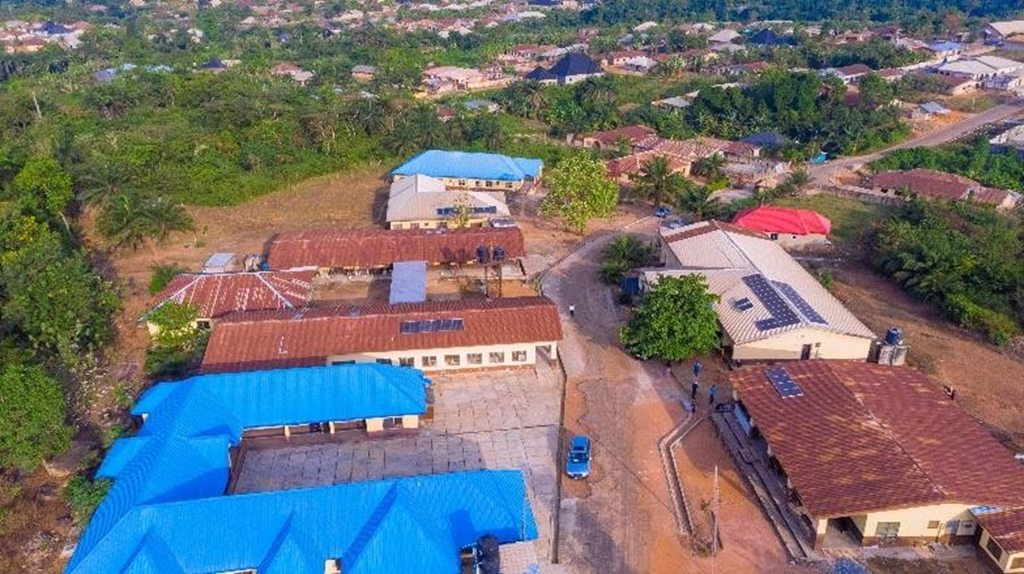
Women hold only 19% of senior leadership positions in the global renewable energy sector, according to IRENA’s 2025 report, Renewable Energy: A Gender Perspective. Omotola Agbi sits in that number, and she is busy changing what it means. As Co-founder and CEO of SAO Energy, she pairs an electrical engineer’s grasp of how power systems work with a financier’s eye for how projects get funded, and she is putting that mix to work switching on power for clinics, schools and small businesses across Southern Nigeria. She does it in an industry where, according to IRENA’s October 2025 Gender Perspective report, women hold just 32% of full-time jobs in the renewable energy sector, a share that has not moved since 2019.
So what does it take to build a minigrid company from that position? In this edition of One on One, we sat down with Omotola to find out. We begin with the spark that pulled an engineer into the business of energy, then follow the money to see how projects become bankable. From there, we step onto the sites where clinics finally keep their lights on, hear what changes for the communities behind the load, and we close with what she would tell a developer entering the sector: ten questions, five chapters, and one CEO with plenty to say.
Segment 1: The Spark
Drive and motivation
1. You trained as an electrical engineer, yet today you steer the financial architecture of a renewable energy company. When did you realize the wires and the balance sheet had to be solved together?
I trained as an Electrical Electronics Engineer with a Master’s Degree in Engineering Science but launched my career as a technical consultant and project manager. I evolved into Business Development following an Executive Master’s Degree in Business Administration. Over the last 10 years, I have worked as a business director and co-founder developing a myriad of infrastructure projects across SAO’s group of companies. My keen focus on SAO Energy’s growth was borne out of passion and a desire to set up a team dedicated to bringing renewable energy to last-mile users by partnering with foundations, state government, development partners and other stakeholders in the private sector.
Building an impact company from the ground up requires a strong network, the right partners to go on the journey with and a firm understanding of project finance. On the part of the customers, we realised in the early days that people are willing to pay for power as long as they are certain of its availability, and our style of deployments at SAO Energy guarantees that. We not only provide power, we ensure our systems add socioeconomic value to our customers, which in turn multiplies the financial returns for us.
2. Over 600 million people in sub-Saharan Africa still lack electricity, a number that can feel abstract. What makes it personal for you, and what brings you back to work on the hardest days?
Fun fact: I wrote my Bachelor’s degree thesis on Rural Electrification, and you could say it has always been at the back of my mind, knowing that just a few kilometres away from where I grew up, with about 70% uptime electricity, lived some people with no connection to the grid. I believe that was the initial eye-opener for me. Starting out as an infrastructure advisory firm over 15 years ago, we developed sectoral relationships with state governments and agencies.
Realising that lack of power was one of the leading causes of lack of education, poor healthcare delivery and a generally poor state of living, we set up SAO Energy to address those concerns, starting with the states we had partnerships with. We carried out an initial audit of over 500 primary health care facilities and developed an innovative mesh-grid system using the primary health care facility as the anchor load and connecting it to households and small businesses, solving multiple social and economic issues at the same time. The joy and overall impact that a successful deployment brings are more than enough to keep me going. Our Monitoring and Evaluation team carries out impact exercises post-deployment, and the numbers are encouraging.
Segment 2: Following the Money
Finance and financing
3. Minigrids are capital intensive with long payback horizons. How does SAO Energy structure blended finance so a project is bankable from day one?
SAO Energy started out deploying micro and mesh-grid projects through grants, foundations and government support, and as the opportunities grew, so did our portfolio.
We expanded into the minigrid space to scale operations as well as reach more communities, and because of the high capital costs, we prepared our business case first, based on the tariffs, number of users, equipment and deployment costs, to model project returns and target a payback period of less than 10 years.
We then bring together the right mix of partners: grantors, debt financiers and equity companies, with each funding source serving a specific purpose. Grants bridge affordability gaps, equity demonstrates investor commitment and absorbs early-stage risks, while debt supports asset financing to achieve said goal, with us at the centre of the deployment as a trusted lead partner.
By aligning each funding source with the project’s financial needs, sharing risk and building on an established customer base, we strengthen the project’s viability and bankability while delivering reliable, affordable electricity to underserved communities.
4. You offer Energy-as-a-Service to ease the upfront burden on customers. How does that model change the conversation with financiers, and what do investors and donors most need to see before they say yes?
Over the years, we have built a solid relationship with a lot of communities across different states, and we have been able to identify various clusters of reliable customers, a majority of whom run small to medium businesses. So the reliability that our systems offer is replicated by having a consistent and predictable stream of revenue from the customers.
Being in a rural community does not equate to a poor community; it is the lack of infrastructure that keeps last-mile users limited in their opportunities, but it is important for us to build trust first, which is why we offer Energy-as-a-Service to open those lines and prove we are a worthy company.
For financiers, this translates into a clearer picture of customer demand and revenue potential. Our financial position, established customer relationships and partnerships with original equipment manufacturers (OEMs), including those with institutional and donor backing, further strengthen our proposition.
Before committing, investors and donors need to see a credible pipeline of projects, a sound financial model and a clear approach to managing risk. This means demonstrating customer demand, realistic tariff and collection assumptions, reliable technology, effective operations and maintenance, and appropriate environmental and social safeguards. Donors can help address early-stage financing gaps, while commercial financiers provide the capital needed to scale.
Ultimately, our approach is to combine these resources in a way that delivers sustainable returns while expanding access to reliable, affordable energy.
Segment 3: On the Ground
Projects delivered
5. Health facilities run through your portfolio, from primary healthcare centres to University College Hospital, Ibadan. Why did healthcare become such a central thread, and what did you learn from delivering that many installations?
As I mentioned above, SAO Energy was born out of a need to address power problems as a critical solution to socioeconomic problems faced in underserved communities. We developed an innovative project using primary health care facilities as anchor customers because we noticed that there was a facility every few kilometres, so the ability to solve healthcare delivery problems while also connecting power to nearby homes and businesses was a successful strategy for us in terms of impact.
We have learned a number of key lessons over the last few years from over a thousand installations, one of which is that a functioning health care facility is central to having a healthy community where children can live up to the best of their potential. The effects cascade to better education, improved social well-being and increased economic activities.
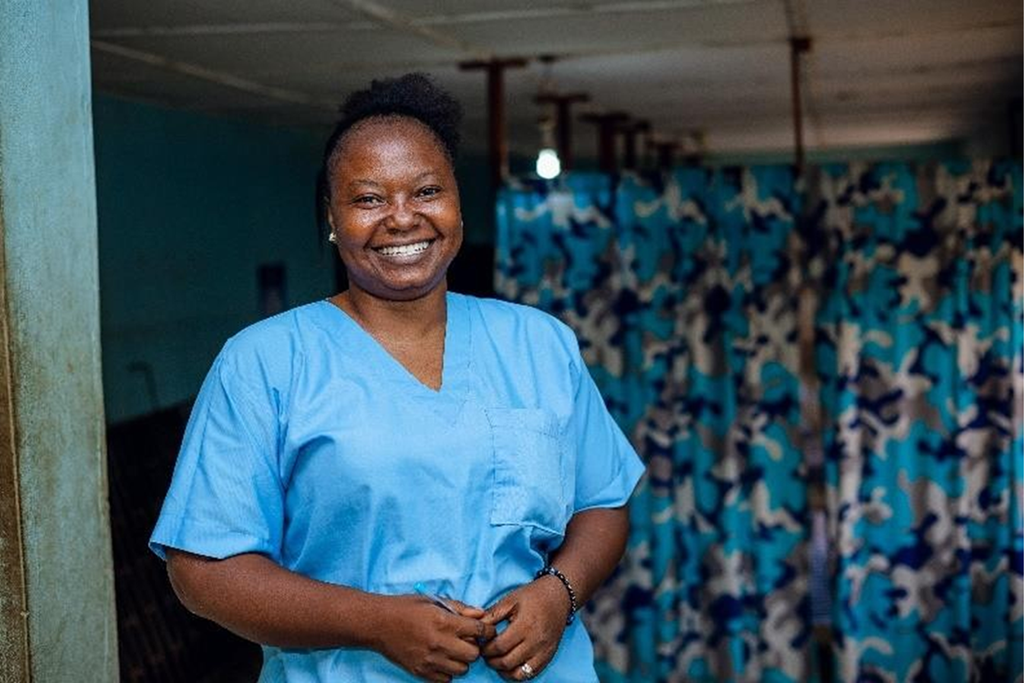
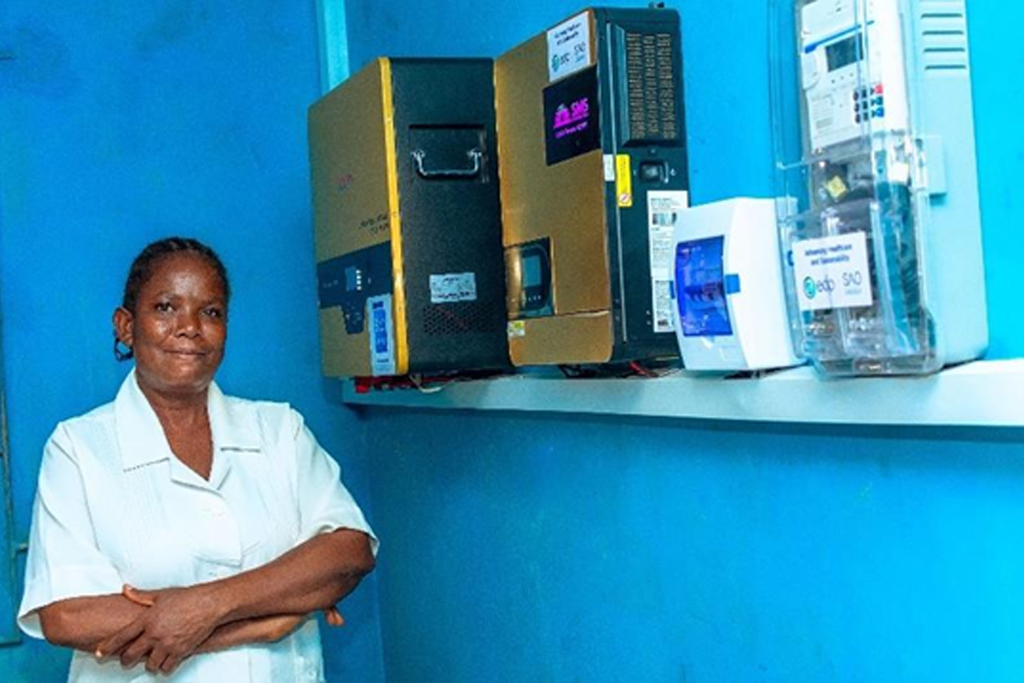
6. SAO Energy deploys minigrids, mesh-grids and home solar. What determines which one goes where, and how do they complement each other on the ground?
SAO Energy deploys minigrids, mesh-grids and solar home systems based on community size, electricity demand, settlement patterns, distance from the national grid and customers’ ability to pay.
Minigrids serve larger, clustered communities with sufficient demand from households, businesses, healthcare facilities and agro-processors, while mesh-grids extend electricity access to dispersed rural households and businesses located near existing generation systems. Solar home systems serve individual households and microenterprises in remote areas where shared infrastructure is not economically viable.
Our activities have so far supported the electrification of over 100 primary healthcare centres and connected hundreds of nearby households and businesses. SAO currently operates six minigrid sites, with a pipeline of over 50 proposed sites across Nigeria and Sierra Leone. Under the DARES supply-side program, we signed a grant agreement to deploy 150,000 solar home systems.
Together, these solutions enable SAO Energy to match the right technology to each community, optimise investment, support productive economic activities and expand reliable and affordable electricity access.
Segment 4: Lives Behind the Load
Community impact
7. When the lights come on at a clinic, school or market, what changes first? (Can you share a number, patients seen, hours of study gained, revenue earned, that shows us the scale of that change?)
The first change is reliable, 24/7 electricity that keeps essential services running and creates measurable social and economic benefits.
In healthcare, SAO Energy has directly benefited over 100 primary healthcare centers, 3 general hospitals and 1 university college hospital serving approximately 1,258,000 patients annually. We have trained over 800 healthcare staff and community health extension workers (CHEWs) in basic system operations and troubleshooting, recruited and trained five Local Maintenance Agents (LMAs) in host communities, and displaced 104 diesel and fuel generators. Our solar solutions have helped reduce overhead costs by approximately 40% for healthcare facilities and businesses.
One example is a Basic Healthcare Center in Southwest Nigeria powered under one of our projects that recorded a 75% increase in hospital visits, a 200% increase in healthy deliveries, 0% child mortality and a significant increase in vaccination services.
For local businesses, reliable electricity enables longer operating hours, reduces dependence on fuel-powered generators and creates opportunities for additional savings and revenue. We are also bridging the digital divide through the design and installation of 40 solar-powered digital literacy centers, which have trained 1,500 pupils in web development and digital marketing, alongside hundreds of teachers in computer-based testing (CBT) examinations.
Environmentally, through the replacement of diesel and petrol generators with solar power, we have drastically reduced greenhouse gas emissions. Together, these outcomes demonstrate how decentralized energy improves healthcare delivery, strengthens education, supports local livelihoods and advances Nigeria’s clean-energy transition.
8. Power only matters if it turns into opportunity. How do you make sure productive use equipment and mesh-grid systems translate into income, and how do you keep communities invested long after commissioning?
At SAO Energy, we start by identifying the community’s economic activities and energy needs before selecting clusters we want to solarize. We focus on opportunities such as agro-processing, refrigeration, water pumping, retail and other small businesses where reliable electricity can directly reduce operating costs, increase productivity and generate income.
Then, through our M&E post-deployment program, we have various channels of communication with our customers to help them understand that the value that comes with a deployment is beyond just providing electricity.
With power comes the ability to use more medical equipment, and in the past, we have deployed medical equipment, offered business support advice and undertaken multiple training sessions to ensure that systems are optimized while improving the economic status of our host communities. When we have a deployment plan, we include some key activities, which include training young men and women to become installers, maintenance officers and M&E agents to ensure they are dedicated to the value optimization and overall cooperative sustainability of the systems.
Segment 5: The Road Ahead
Vision and the sector
9. SAO Energy aims to have the largest energy mix in Africa across solar, hydro, gas and biomass. Where do minigrids fit in that picture, and what does a hybrid future look like for last-mile communities?
We have been steady, consistent and progressive with our growth as a company. We started out with mini/mesh-grid projects for rural homes, small businesses and clinics, then gradually expanded our customer base to processors and peri-urban communities, and we are now looking to enter the Commercial and Industrial (C&I) space. It is important that we expand our mix of solutions as we evolve in the renewable energy space through consistent, innovative research and by working with diverse partners in the renewable energy sector.
Our approach is to treat minigrids as part of a broader energy ecosystem, rather than relying on a single technology. Solar can provide the primary generation source, while battery storage ensures power availability when sunlight is limited. Depending on the location, demand and resource availability, hydro, biomass, or gas can complement solar to improve reliability and optimise costs.
10. What is that one piece of advice you can give a developer entering the sector?
One piece of advice I would give a developer entering the sector is to develop relationships with your last-mile users and know what they want. It is not enough to deploy and exit a project; it is important to maintain relationships, because once you get the loyalty and trust of one community, it cascades, and there is nothing more vital to business longevity than the client’s trust.