


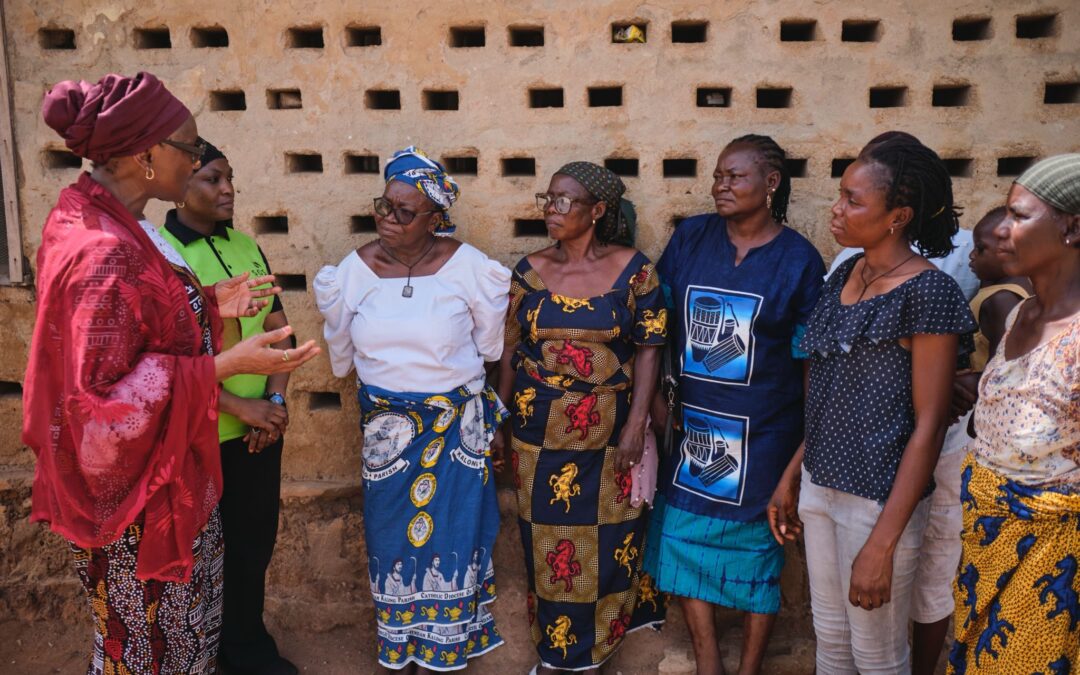
On World Environment Day 2026, themed “Inspired by Nature. For Climate. For Our Future.” and observed under the global call to action #NowForClimate, we spotlight Habiba Ali, CEO of SOSAI Renewable Energies Company, not simply as a clean energy entrepreneur, but as a systems architect demonstrating how decentralised renewable energy is one of Africa’s most powerful and practical responses to the climate emergency.
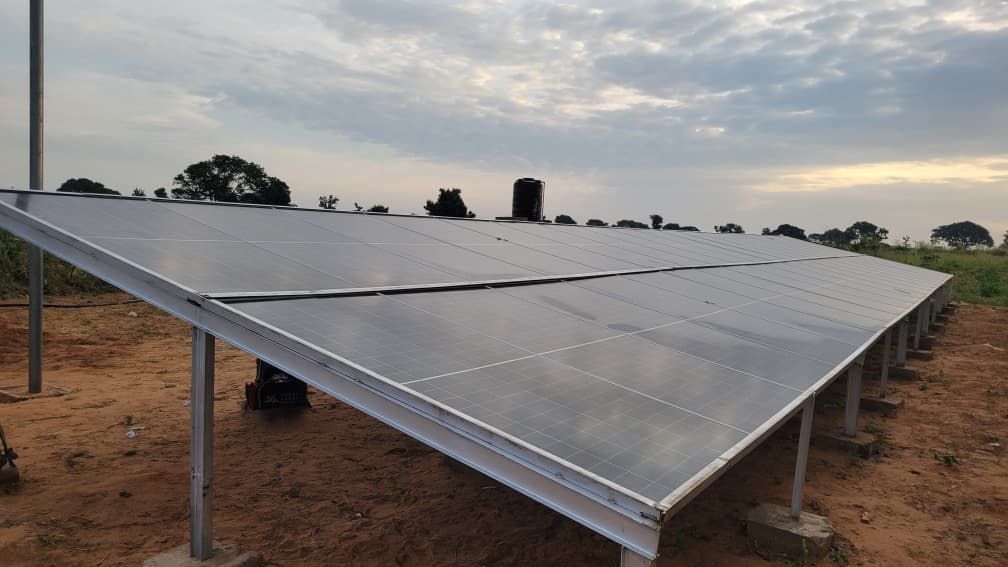
From deploying solar and battery systems for SMEs in Abuja, in partnership with the Women Chamber of Commerce, Industry, Mines & Agriculture and Zenforte Consulting, to building integrated energy ecosystems that include clean cooking and cooling solutions, Habiba’s work illustrates a fundamental truth: energy transition is not just environmental policy, it is climate infrastructure at the community level.
As the world marks this year’s World Environment Day, this conversation explores how Nigeria’s decentralised energy sector is translating global climate ambition into local, measurable action.
AMDA: World Environment Day 2026 calls on us to rethink the systems that power our economies. SOSAI has evolved from delivering solar solutions to building integrated energy ecosystems, from minigrids to clean cookstoves and cooling systems. How do you define the role of minigrids within this broader systems-level shift toward climate-resilient local economies?
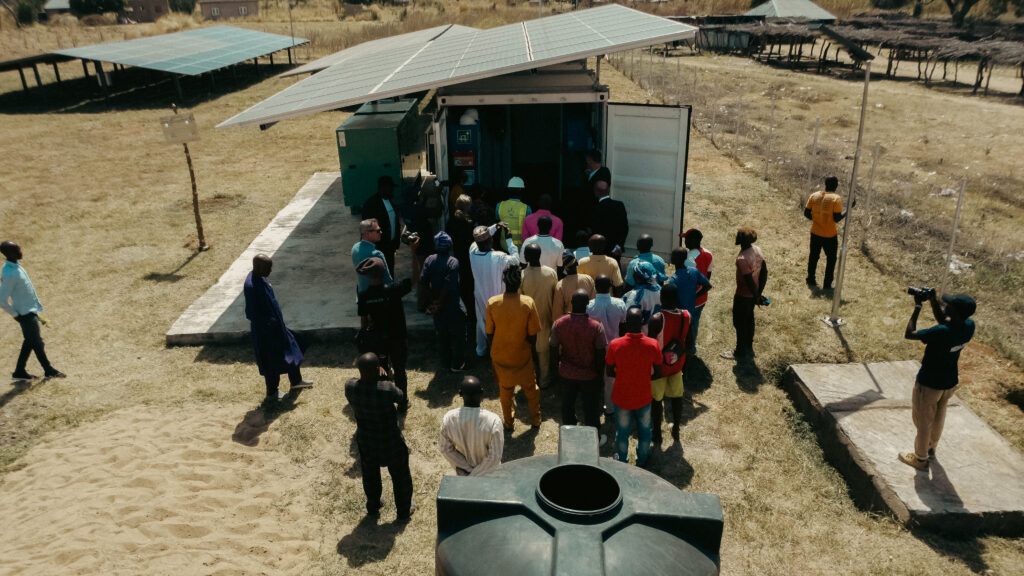
Habiba: Minigrids are comprehensive solutions that bring together multiple technologies — clean cookstoves, lighting, productive use of energy — under a single umbrella. Unlike standalone solutions, which require separate accounting and deployment per household, a minigrid approach allows us to integrate these elements into a coherent, scalable system. That is what makes minigrids so powerful in the context of building climate-resilient local economies.
AMDA: The science is clear: replacing fossil fuel-based power with decentralised renewables is among the most direct pathways to emissions reduction in underserved communities. As a technical partner on the Abuja pilot, SOSAI helped design and deploy right-sized solar and battery systems for SMEs. What did this experience reveal about the real-world climate and economic impact of energy access at the enterprise level?
Habiba: What that experience revealed, first and foremost, was a significant awareness gap. We worked with five women-led enterprises, and many of them simply did not know that their use of diesel generators was contributing to climate change. They knew the noise was unpleasant and the fumes were unpleasant, but the deeper climate implications had not registered. When we explained that every gallon of fuel burned emits 27 kilograms of CO₂, that was a genuine revelation for most of them.
The economic case was equally eye-opening. Initially, all five participants said the upfront cost of solar was too high. So we sat with them and broke it down: if you are spending 500,000 to one million naira a month on diesel, the solar investment pays for itself in 20 to 40 weeks — and then you have at least another five years of clean, low-cost power. Once they saw that, the conversation shifted entirely. These women were spending roughly 50 percent of their operating costs on power; solar brought that down to around 20 percent. That 30-percent reduction was transformative for their businesses, quite apart from the health and climate benefits.
We also found that the pay-as-you-go financing model was critical. Once they understood that their monthly repayment could essentially replace what they had been spending on diesel, the decision became straightforward. The project began with a solutions lab involving about 60 women from different sectors — bakeries, spas, schools, pharmacies, tailoring shops — and we let them define their own energy needs before selecting five enterprises for the pilot. That co-design process was essential to getting genuine buy-in.
AMDA: This year’s theme — “Inspired by Nature. For Climate. For Our Future.” — asks us to look to nature as the foundation for climate resilience. In the communities where SOSAI operates, how does the shift to clean energy change the relationship between local livelihoods and the natural environment?
Habiba: When I was actively selling improved cookstoves, I would visit rural communities and ask people to simply look around and compare what they saw to what they remembered from 15 or 20 years ago — how many more trees there used to be, how much water flowed in the rivers, whether there was still game in the forests. Almost without fail, the response was the same: “When we were children, our parents went hunting. Now there is nothing left to hunt. The rivers are dry; we cannot fish anymore. We do not even have trees to cook with — we have to buy them.”
Living in the north, where deforestation has been severe, I have seen this firsthand. Once people connect the dots between their energy choices and the degradation of their environment, the shift in understanding is profound.
The shift to clean energy changes this relationship in two important ways. First, by removing the pressure on natural resources entirely — when you no longer need to cut down trees to cook, those trees regenerate on their own. Second, we actively encourage the people we work with to take one concrete step toward restoring nature: plant two trees when you get a new meter, plant three when you adopt an improved cookstove. These small acts, multiplied across thousands of households, add up. Nature is remarkably resilient when we simply give it the chance to recover.
AMDA: Climate vulnerability is not equally distributed. Many communities served by decentralised energy developers are also among the most exposed to climate shocks — floods, heat stress, and erratic rainfall. How does reliable renewable power strengthen the resilience of these communities to withstand and recover from climate impacts?
Habiba: I think about a community in Kalong where we worked. Before our intervention, they had a garri milling area but lacked the capacity to dry the garri quickly enough. They would dry it on the floor and lose entire batches to flooding. With solar-powered drying, they can now process their harvest immediately, so they no longer lose their produce when the rains come.
The same community is also a groundnut farming community. Groundnut is harvested during the rainy season, which previously meant farmers faced a stark choice: dry it on the ground and risk losing it to rain, or leave it to rot. Now, with reliable power for drying, they can preserve their harvest immediately after collection. They no longer lose crops to weather events. For me, these are the concrete, tangible ways in which clean energy directly builds climate resilience at the community level.
AMDA: Clean cooking is often the invisible pillar of household-level climate action — removing indoor air pollution, reducing deforestation, and cutting emissions. What has SOSAI’s experience with integrated clean cooking and energy solutions taught you about closing this gap in Nigeria?
Habiba: Between 2008 and 2009, I led baseline and feasibility studies for a UNFCCC clean cooking project. At the time, the philosophy was to take a gradual approach — transitioning people from inefficient cooking to improved stoves first, then up the energy ladder toward kerosene, LPG, and eventually electricity. The idea was to help people climb the ladder one rung at a time.
Recently, I reflected on that and realised: the child who was born when we started that project is now 16, and we are still promoting improved cookstoves. That is not progress. It tells me that too many stakeholders benefited from keeping communities at the “improved” stage rather than advancing to genuinely clean solutions.
We should by now be promoting electric cooking and LPG even in rural areas. The good news is that as minigrids become more widespread, there is a real opportunity to bundle electric cooking into minigrid solutions from the outset. If developers size their systems to accommodate electric cooking loads and offer affordable tariffs — for example, cheaper rates during the day to encourage daytime cooking — they can drive adoption while simultaneously improving their own utilisation rates. It is a win on every level: for climate, for communities, and for the commercial viability of the minigrid itself.
AMDA: The #NowForClimate campaign emphasises urgency — that change is already in motion and the question is how fast we guide it. What are the most persistent structural barriers slowing the pace of minigrid and decentralised renewable energy deployment in Nigeria, and what would genuinely accelerate scale?
Habiba: It comes down to two things: finance and bureaucracy. The current momentum in minigrids in Nigeria exists almost entirely because of available subsidy programmes — but accessing those subsidies is genuinely difficult, and disbursing the funding is even harder.
My recommendation would be to identify the developers who have a proven track record and lower the barriers for them — not to remove rigour, but to reduce the friction that delays good projects. And once a developer is approved, the programme should release at least 20 to 30 percent of funding upfront. That capital gives developers the leverage to approach commercial banks, secure counterpart financing, break ground on sites, and actually start delivering. Right now, the gap between approval and disbursement is killing momentum.
Beyond finance, two other barriers matter enormously. The first is human capital: we need to train significantly more skilled technicians and operators to build and maintain these systems at scale. The second is digitalisation: remote monitoring tools that allow developers to manage multiple sites without needing boots on the ground everywhere. Solving these three constraints together is what will genuinely unlock scale.
AMDA: Minigrids are often discussed in terms of electrification numbers. But their climate contributions — avoided emissions, reduced diesel dependence, and enabling productive use of clean energy — are equally significant. How should the sector be advancing this climate narrative with governments and investors?
Habiba: In many respects, this narrative is already embedded in how the sector operates. No project gets approved without an Environmental and Social Management Plan. Impact metrics — jobs created, emissions reduced, productive uses enabled — are standard requirements under programmes like the Nigeria Distributed Access through Renewable Energy Scale-up (DARES) programme. When we are in deep conversations with institutions like the IFC, they want to know our planned productive use of energy, our projected emission reductions, and our broader development impact. These are not optional extras; they are baseline expectations.
Where the sector can go further is in making these impact stories more visible and accessible to a wider audience — not just within project applications, but as part of the public narrative around why clean energy investment in Africa matters. The numbers are compelling; we need to communicate them more effectively beyond the technical and finance communities.
AMDA: Financing remains one of the critical constraints on the energy transition in Africa. Which financial innovations — blended finance, carbon credits, results-based financing — do you see as most promising for unlocking capital for climate-aligned energy infrastructure at the community level?
Habiba: If I had to choose one, it would be results-based financing. If I could choose two, I would add blended finance. Carbon credits, in my experience, simply do not move the needle at the scale of a capital expenditure. We recently sold credits from two sites for an entire year and received approximately $3,000 — that is meaningful for small operational expenses, but it is not capital for infrastructure. You would need hundreds of sites to generate revenue that materially impacts project financing.
Results-based financing works because it ties disbursements to verified outcomes, which builds accountability and gives developers a credible path to funding as they deliver. Blended finance — where grant capital is combined with equity and concessional debt — reduces the risk profile enough to bring in commercial capital that would otherwise stay on the sidelines. Together, these two mechanisms can genuinely unlock the capital the sector needs.
AMDA: Can you share a story where access to clean, reliable energy directly enabled a community or enterprise to adapt to or recover from a climate-related challenge?
Habiba: There is a story I return to often. In a community we supplied with a solar-powered refrigerator, there was a woman whose husband passed away and left her, his co-wife, and their children with no income. She stepped up and became the family’s breadwinner — using the solar refrigerator to sell cold drinks from her home. That single piece of equipment gave her the means to support an entire household. It is a quiet story, but it captures something important: clean energy does not just power devices; it powers lives and gives people the foundation to withstand whatever comes their way.
AMDA: Large-scale renewables dominate the global climate narrative. Where do minigrids and decentralised energy fit within national climate strategies and NDCs?
Habiba: Using Nigeria as a case study: the level of energy inequality is so severe that a large proportion of rural communities have no grid connection whatsoever. Minigrids are not a supplementary solution here — they are the primary solution. The government simply cannot extend the national grid to every rural area in any near-term timeframe, which means minigrid developers are effectively delivering national climate infrastructure.
Echoing this point, Moses Abdullahi, Monitoring & Evaluation Officer at SOSAI, noted that you can see this on the ground: travel through rural communities in the north, south, or east, and you will find a minigrid developer already on-site or already planning to be there. Minigrids are at the top of the priority list, not just in policy documents, but in practice. That gives me genuine confidence that decentralised energy has found its place within Nigeria’s national climate strategy.
AMDA: Looking at Nigeria’s decentralised energy sector over the next five years, where do you see the most significant opportunities to advance both productive use and genuine climate impact simultaneously?
Habiba: The greatest opportunity lies in rural communities, and specifically in the hands of women. In many of the communities we work in, the men handle farming and harvesting, and the women handle all post-harvest processing — milling, cleaning, bagging, and selling the produce. That is their livelihood. When you electrify those processes — corn mills, threshers, drying machines — you are not just reducing emissions; you are directly and meaningfully improving the economic lives of women who run their households on those proceeds.
Supporting this perspective, Moses also added that productive use of energy in rural communities is where climate impact and economic empowerment converge most powerfully. That is where I see the greatest opportunity over the next five years.
AMDA: If you were advising fellow developers, policymakers, and development finance institutions on the most critical priorities to advance climate-aligned energy access in rural and peri-urban communities, what would be at the top of that list?
Habiba: Minigrids remain the top priority for clustered communities. But I would add a strong case for mesh grids in dispersed communities, which is an often-overlooked solution. I recently visited communities in Zambia that we are considering for future work, and the settlements were so spread out that a traditional minigrid would simply not be cost-effective. In those contexts, mesh grids are the more practical and affordable option — for the developer and for the community.
We also need to be honest about the fact that in many of these communities, energy payment culture does not yet exist. People have not historically paid for electricity, so the commercial model needs to account for that reality. Mesh grids, with their lower cost structure, can be a more viable entry point for communities that are not yet ready for a full minigrid tariff model.
AMDA: If you could change one thing — in policy, in finance, or in how the world thinks about energy and climate — to accelerate inclusive, sustainable energy access across Africa, what would it be?
Habiba: Finance. Full stop. Everything else — policy, technology, talent, will — exists or can be developed. What is missing is easier, faster access to grants and capital to build the infrastructure. If I could change one thing, it would be to remove the barriers that keep good developers from accessing the funding they need to move from approval to action. The solutions are there. The communities are waiting. What Africa’s energy transition needs, above all else, is capital that moves at the speed of the opportunity.
“When a woman in rural Nigeria or The Gambia powers her business with sunlight instead of diesel fumes, she is not just saving money — she is healing the planet, one kilowatt at a time. Happy World Environment Day.”
— Habiba Ali, Founder & CEO, SOSAI Renewable Energies